Lighting
- Cheyanne Mayes
- 2 days ago
- 2 min read

Ancient Rome used mainly natural sunlight as the primary light source. The best example of this is the pantheon. The oculus found in the center of its dome acts as the primary light source. But the pantheon was not the only one that did this. In the Domus Aurea’s octagonal room there is also an oculus. There are also windows in the tops of the walls that connect to the adjoining rooms. These windows allow for light to travel from the oculus into the rooms. This was a great way to optimize the use of natural light.
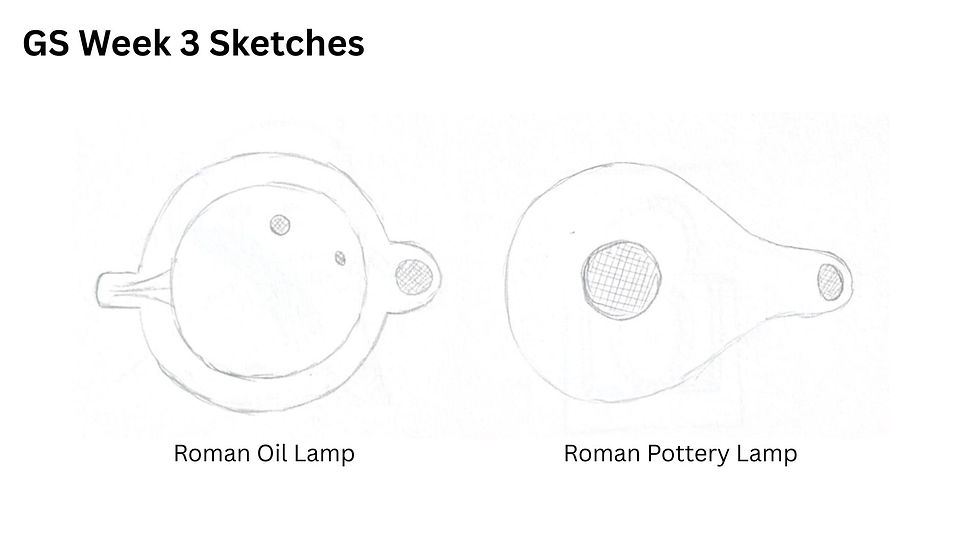
But what happens when the sun goes down? Many parts of the city became very dark because there was no public lighting, but the places where the wealthy stayed had outdoor lamps. Inside they also used oil lamps, pottery lamps, and candles. The primary source for all of Rome was the oil lamps. They gave off enough light and would last longer than the other methods. However, like most things, there was a difference between the wealthy and poor’s oil lamps. The wealthy used vegetable oils in their lamps while the poor used fish oils in theirs.
Romans wanted their homes to feel warm and inviting, so they did not just rely on oil lamps to achieve this. They also used lighting fixtures. Sconces, stands, and chandeliers that had candles attached to them. They were placed near doors and in important rooms, all to make guests more welcomed. However, the poor could not afford such a luxury. Instead they stuck to their oil lamps, hoping that no one would accidentally knock one over.
Today many of these places have artificial light added to them. Many are not very obvious and almost hidden for a reason. Since the Pantheon’s main source of light is sunlight through the oculus, there are artificial lights added for when it is in use at night. However, when adding these, it was important not to take away from the oculus. So they are placed on the lower edge of the dome, where it meets the walls. They are small and flat, almost unnoticeable unless you are looking for them. There are also other lights throughout, all tucked away and barely noticeable.


References:
Interior Designy. (2025, October 18). How did the Romans illuminate their spaces? https://interior-designy.com/how-did-the-romans-illuminate-their-spaces.html
The Archaeologist. (2026, June 17). Roman lamps: Lighting the houses and streets of antiquity. https://www.thearchaeologist.org/blog/roman-lamps-lighting-the-houses-and-streets-of-antiquity
Pantheon Rome. (2025, April 24). The oculus of the Pantheon: Architectural marvel of ancient Rome. https://www.pantheonroma.com/en/2025/04/24/the-oculus-of-the-pantheon/

Comments