Plumbing and Sanitation
- Cheyanne Mayes
- 2 days ago
- 2 min read

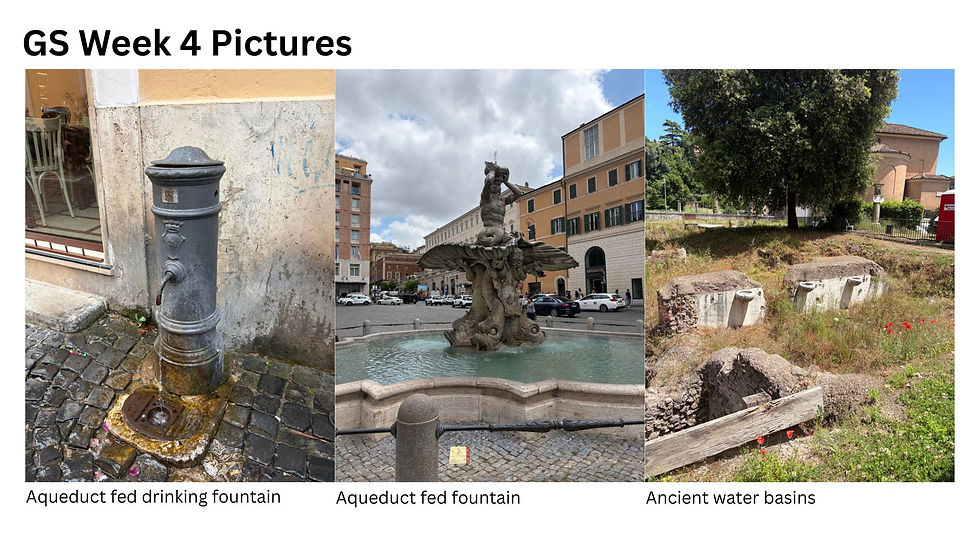
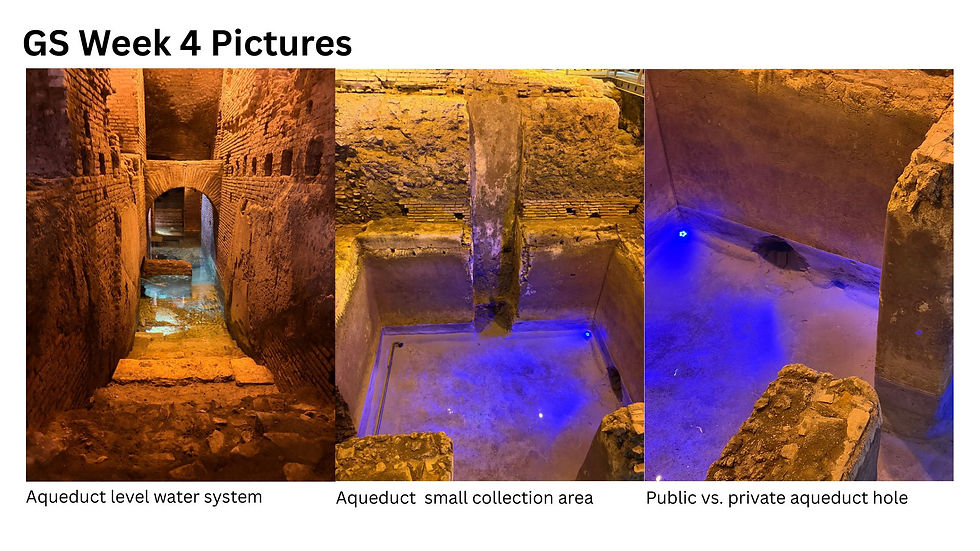
Not only did the Romans use the aqueduct system, but they also perfected the sewage and drainage system. Knowing that the aqueducts were feeding so much water into the city, there had to be a way to drain it out. So they made a drainage system that was underground. Its main purpose was to move the surface water that had already been used for baths, fountains, drinking water, and bathrooms, away from the city.
The largest sewer system that is still in use today is the Cloaca Maxima. It was built about 500 years before the aqueducts. Its original purpose was to drain storm water from grassy areas around the Forum. After building the aqueducts, the Romans realized it could serve the purpose of a main sewage system. So, they got to work on connecting smaller sewage systems to the Cloaca Maxima. If you were wealthy enough, you could have a line going directly to your house, however this gave way to a nasty smell in the vicinity of the toilet. Others would visit public toilets or dump pots into the sewer directly.
They also made adaptations to existing systems. In the baths they implemented a hot and cold water system. This was done by heating the air underneath the baths with a furnace. This would slowly heat the tile and stone of the bath floor and then the baths. However the baths still were not the most sanitary place. With sick and healthy people bathing in the same water, people got others sick. So, they started to empty the baths once a day, and used the old water to flush out the sewerage system.
When looking at the cities we visited, Venice had to make a huge adaptation to accommodate a sewage system. Unlike Rome and Florence, Venice cannot have an underground system, since there are so many water channels through the city. Originally they would just let the channels flush themselves out, but this method would not be effective enough for the city. So, they moved to an imhoff tank system. This collects sewage water in tanks where the water is treated and solids are broken down, before entering back into the channel. But, this still was not enough, so today, they have pipes that move the sewage to a treatment facility on the mainland.

References:
Gravel, M. (n.d.). How do they get rid of sewage in Venice? Mike Gravel. https://www.mikegravel.org/how-do-they-get-rid-of-sewage-in-venice/
Plumbing World. (2007). History of Roman plumbing. Internet Archive. https://web.archive.org/web/20071203182653/http://www.plumbingworld.com/historyroman.html
Everything Explained Today. (n.d.). Sanitation in ancient Rome. https://everything.explained.today/Sanitation_in_ancient_Rome/

Comments