Ancient Infrastructure and Water Systems
- Cheyanne Mayes
- 2 days ago
- 2 min read

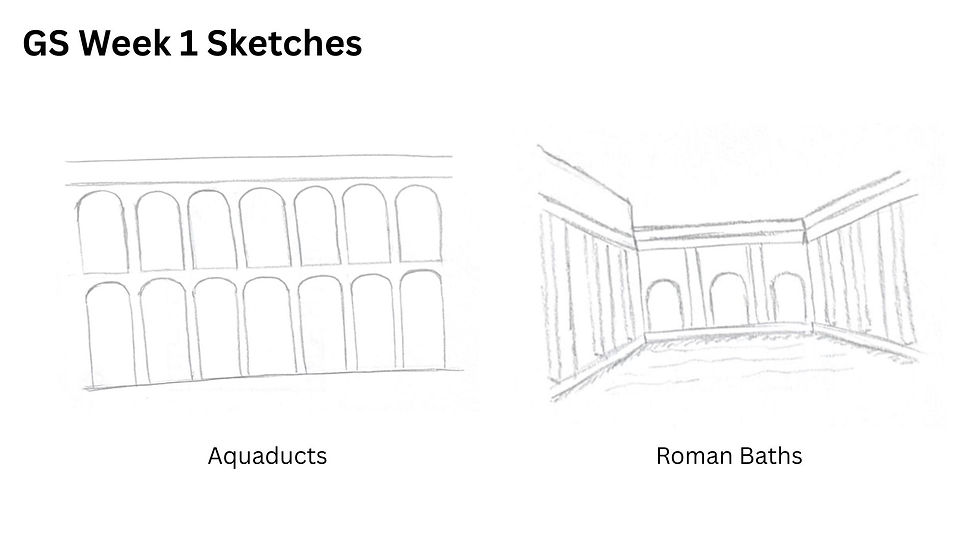
The Romans are well known for their innovative designs, especially how they have used water. One of the most impressive examples of this is the Roman Aqueducts. They are a gravity fed water distribution system. With eleven original aqueducts, the Romans were able to make water an everyday commodity and not just a rarity. But how did they do it?
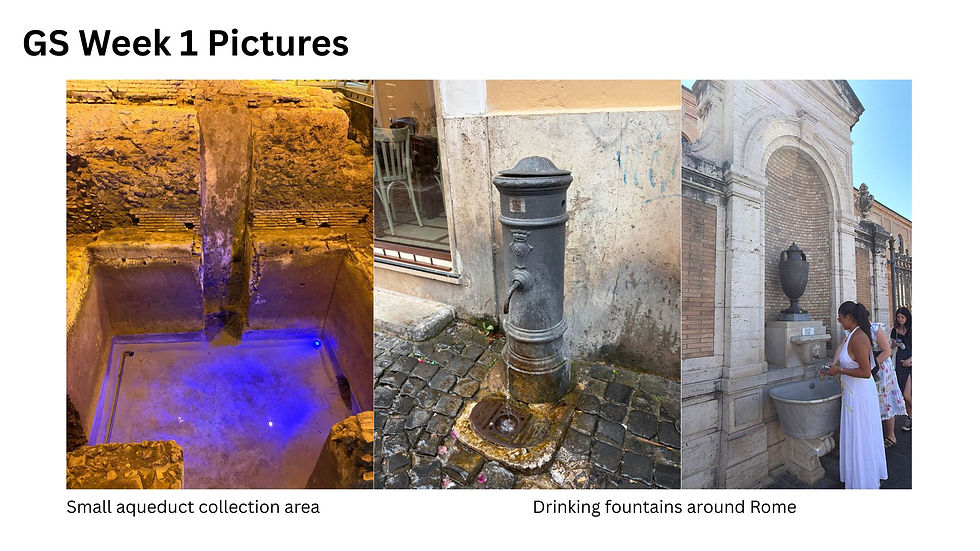
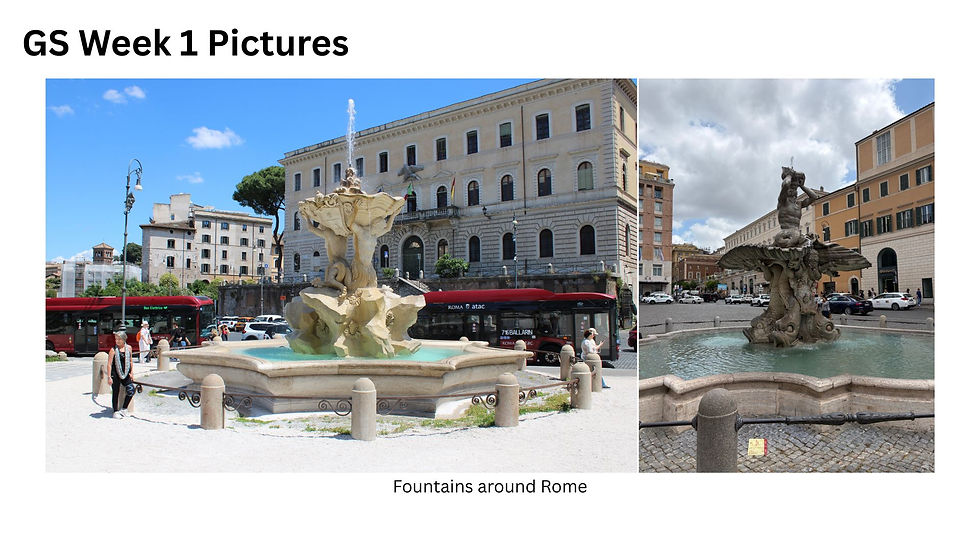
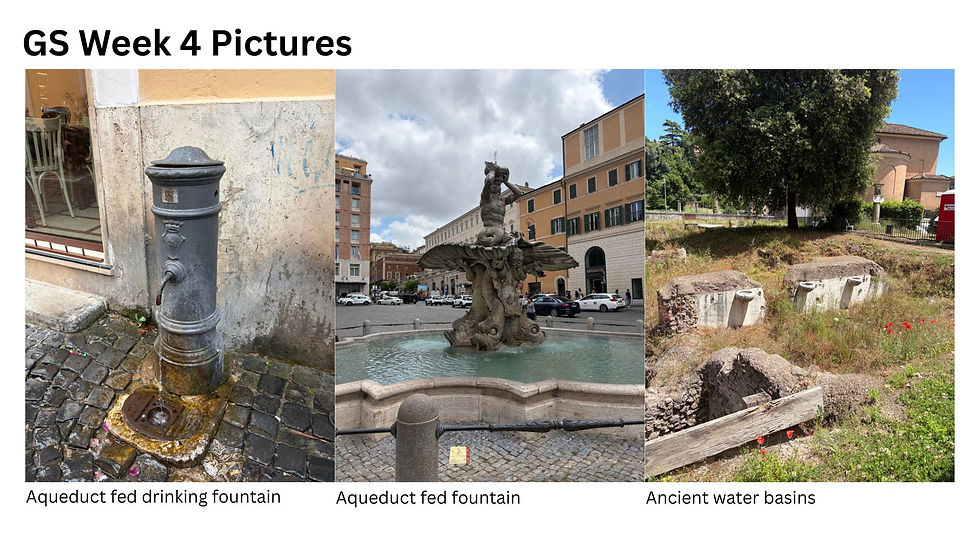
They started at the tops of hills where they were able to find mountain springs as a source of water. The Aqueduct channels then decline slowly towards the city of Rome. With the changing of the terrain, Romans had to adapt, with one aqueduct even going underground. Once they reached the city, the water was emptied into a water distribution facility called Castellum Aquae, or water caste. The water was then dispersed throughout the city to the baths. However, after realizing they could do more with this system, the Romans added and fed water to fountains. The aqueduct's continuous flow of fresh water made it safe to drink. This gave a practical use to the beautiful fountains that are seen all around Rome. They were places where anyone could come and collect water as they needed. Water could also be fed to someone’s private home for an extra price. Mainly the wealthy splurged on this, but even the common folk were no more than a few minutes walk from a public fountain. All around Rome, it is hard to miss the Nasonis, or drinking fountains, that are on nearly every corner. They are named for the curved spout that slightly resembles a nose. These drinking fountains are still fed by the aqueducts.
It is hard not to notice the mass use of water in the city. The Romans' way of living was heavily centered around the use of water. From spending all day at the baths, enjoying fresh drinking water, or even running water in their homes, they were always using it. The aqueduct and water systems connected this great empire in so many ways.
References:
Facts and Details. (n.d.). Water in ancient Rome: Aqueducts, baths, fountains and sewers. Facts and Details. https://europe.factsanddetails.com/article/entry-477.html
The Archaeologist. (2026, June 16). Roman urban water management: The aqueducts and fountains of Rome. The Archaeologist. https://www.thearchaeologist.org/blog/roman-urban-water-management-the-aqueducts-and-fountains-of-rome
Journeys to Italy. (2026, May 8). Why Rome has so many outdoor fountains and public water sources. Journeys to Italy. https://www.journeystoitaly.com/why-rome-has-so-many-outdoor-fountains-and-public-water-sources/

Comments